I’ve hiked the Kalalau Trail three times now, and it’s one of my favorite hikes in Hawaii. This epic coastal trek on the island of Kauai is usually done in 3 days and 2 nights.
It’s an adventure that has it all: jungles, beaches, waterfalls, and the towering green cliffs of the Na Pali coast — the perfect place to camp!
It’s also a notoriously long and tough hike with some dangers involved, so permits are required to do the trail.
Even so, it’s a very special experience that’s worth any of the hassle that may stand in your way.
In this blog post, I’ll explain everything you need to know about the Kalalau Trail and how to hike it!
Quick Stats*
- Distance: 22 miles (35 km)
- Elevation Gain: 6,500 feet (1,980 m)
- Duration: ~3 days
- Difficulty: Hard
*These are total stats for the roundtrip trek
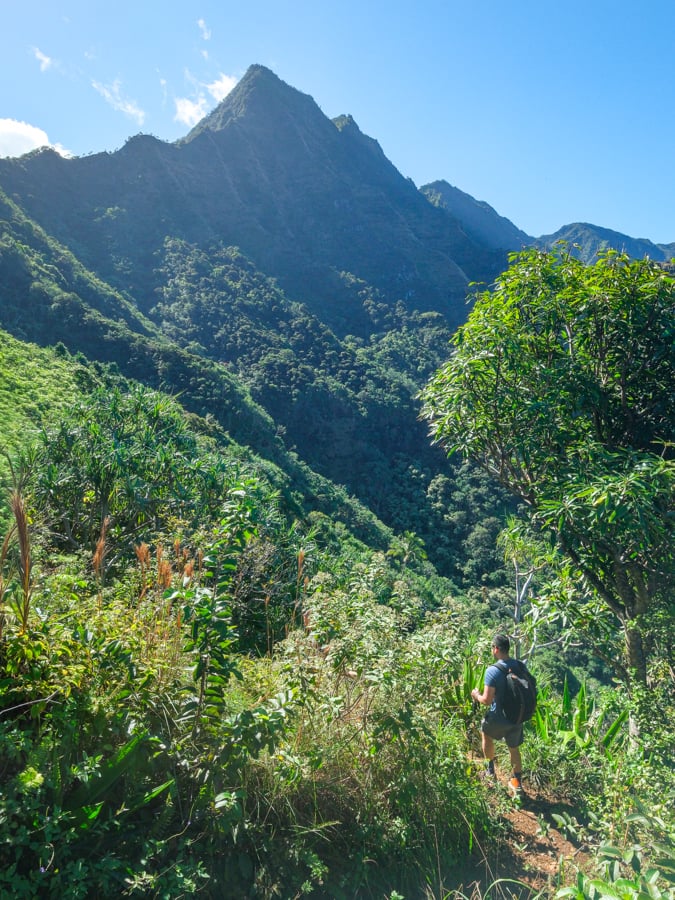
One of my favorite parts of the trek
Full Trail Description: Step-By-Step
• Miles 0–2: Ke’e Beach to Hanakapi’ai Beach
The hike begins at Ke’e Beach with a steady climb along a rocky and muddy trail. The start of the hike is actually the wettest and most slippery part of the whole trail.
You’ll get your first good views of the Na Pali coast at approximately 1.2 miles, and sometimes in the winter you can even see whales spouting in the distance, so keep an eye out for that!
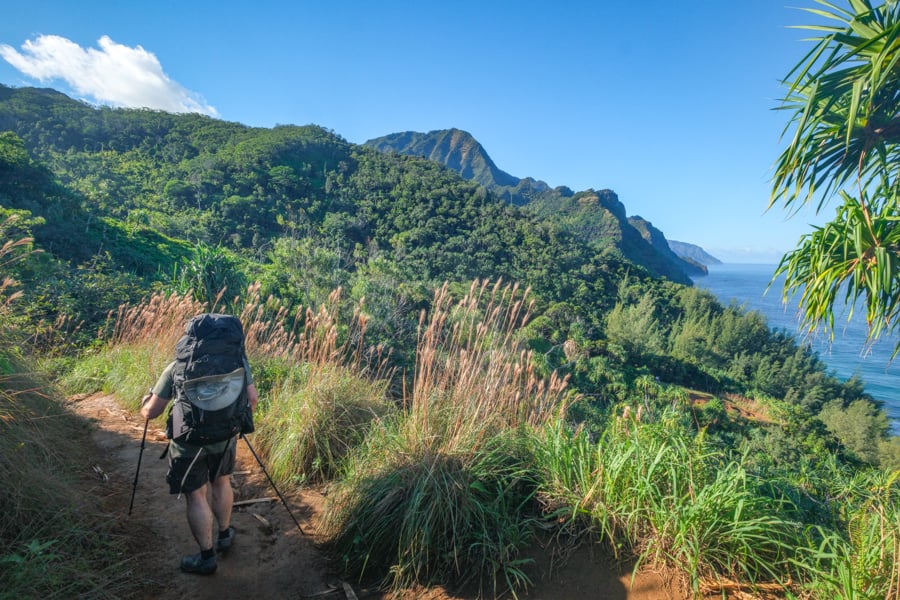
Early views on the hike
Next, the trail descends to Hanakapiai Beach and crosses a stream.
Sometimes it’s better to take your shoes and socks off in order to wade through the streams, rather than trying to hop boulders; otherwise you run the risk of falling in and getting all your gear wet.
After the stream, there’s an optional spur trail to Hanakapiai Falls if you want to see a tall waterfall and go for a swim.
That detour adds 3.4 miles roundtrip, so you’ll probably want to do it on the way back, and save your energy for the main trail first.
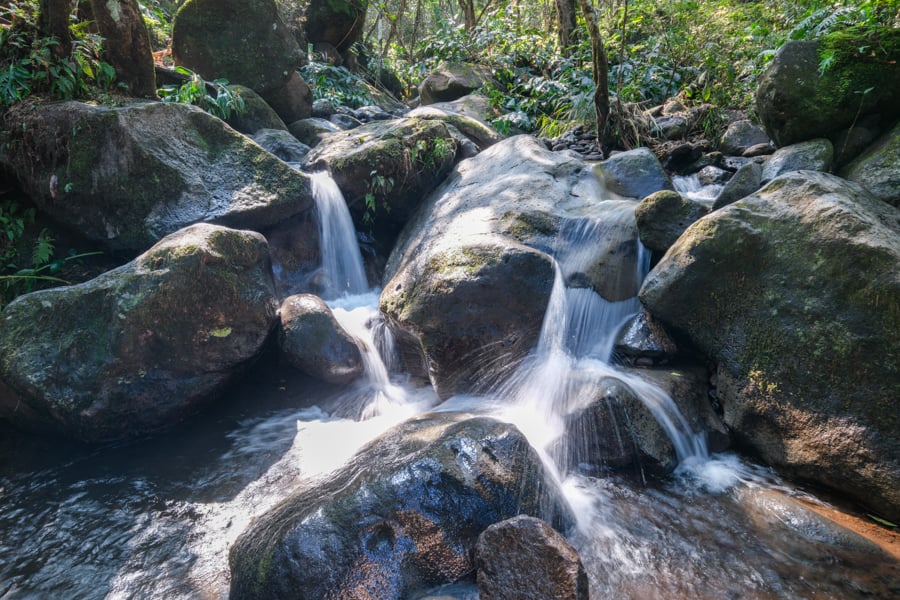
Stream crossing
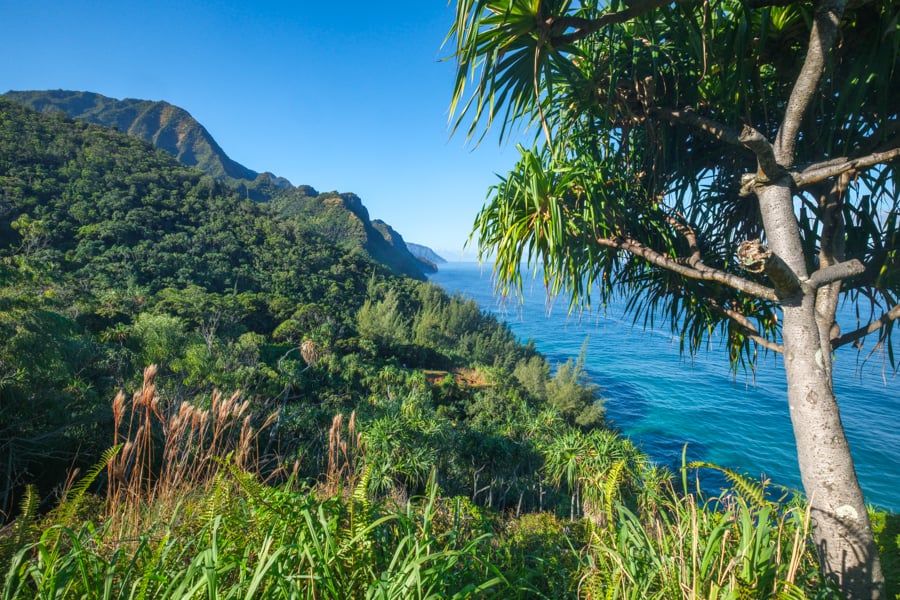
Wonderful Hawaiian scenery
• Miles 2–6: Hanakapi’ai Beach to Hanakoa Valley
This portion of the trail has another ascent, and then it becomes noticeably more rugged and narrow, with thick foliage on both sides. The bushes may occasionally hide steep drop-offs, so don’t get too careless.
Along the way, you’ll often hear the buzz of helicopter tours overhead. Seeing the Na Pali coast from above is a bucket list experience if you get the chance to do it!
Eventually you’ll pass through a gate at Space Rock, which is the highest point of the trail, and then there are two smaller stream crossings (Ho’olulu and Waiahuakua).
There’s a camping area at the Hanakoa Valley, but it’s buggy, so most people skip it. Then there’s another stream crossing and an optional spur trail to Hanakoa Falls that adds 1/2 mile roundtrip.
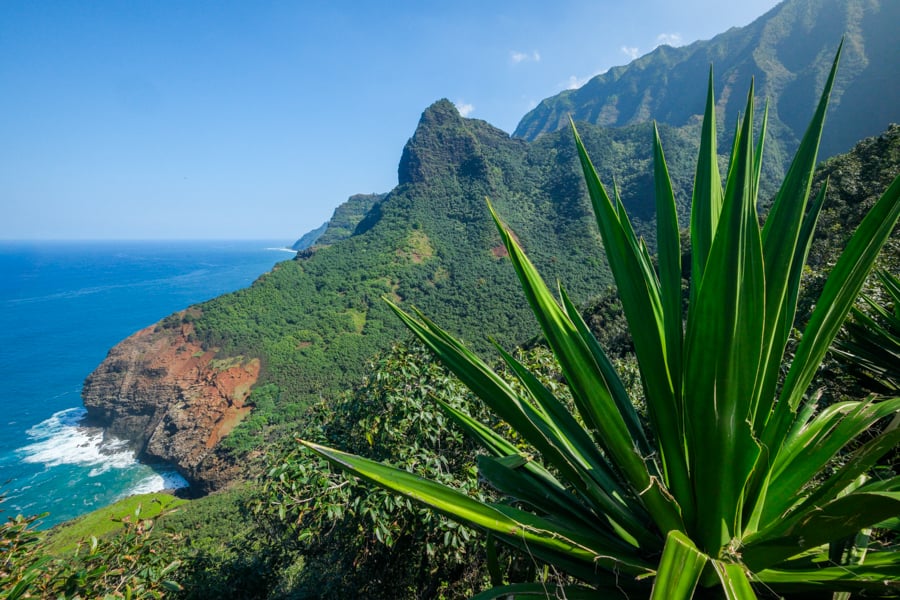
The landscapes are so exotic
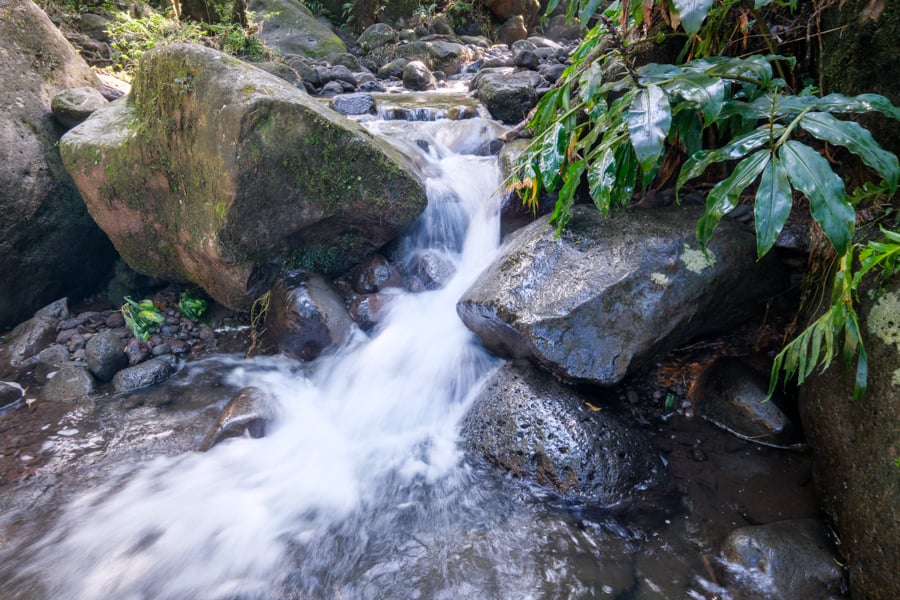
Another stream crossing
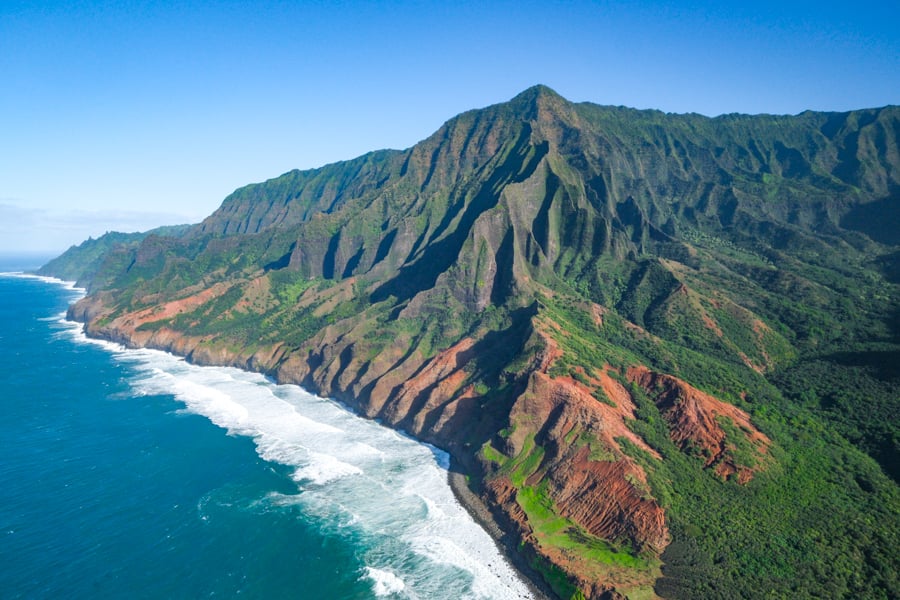
Helicopter view of the Na Pali coast. The trail winds along this coastline!
• Miles 6–9: Crawlers Ledge to Kalalau Valley Rim
The section after Hanakoa is one of the most treacherous parts of the hike. It’s not technical or anything, but it can still be scary.
There’s an awkward descent on a slippery dirt path, followed by an infamous section called Crawlers Ledge.
The path here is slightly wider than a person, with a rock wall on one side and steep drop-offs into the ocean on the other. You’ll have plenty of traction as long as you walk slowly and hug the wall.
After Crawlers Ledge, the trail continues across high ridges with expansive views of the Na Pali coast. There are a few dirt sections where you need to watch your step, especially if it’s raining, but other than that it’s mostly safe.
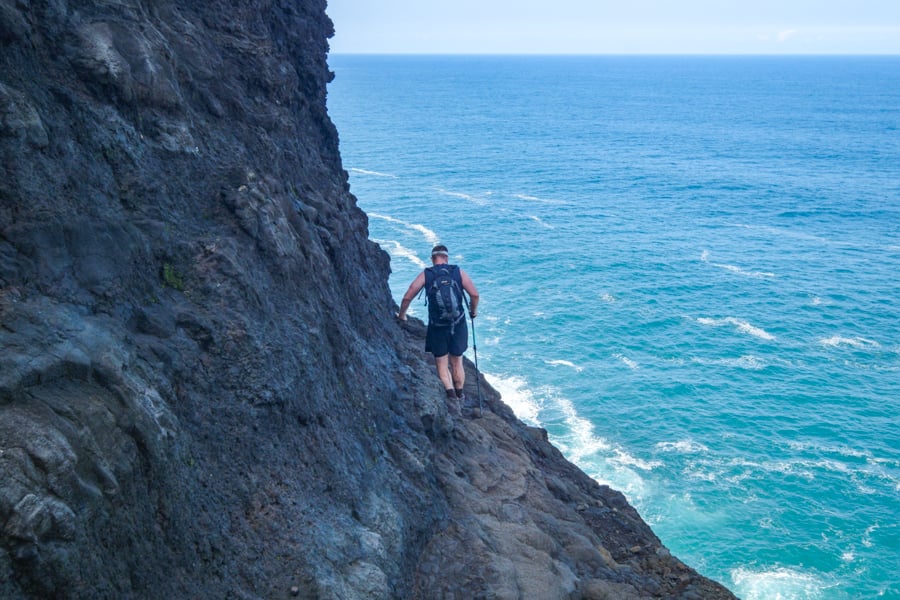
Crawlers Ledge
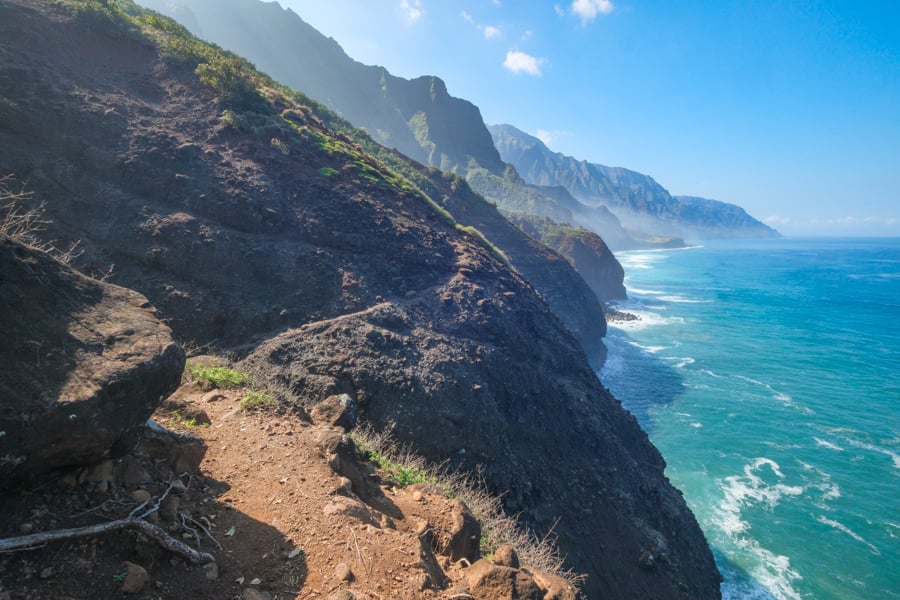
Another steep section of the trail
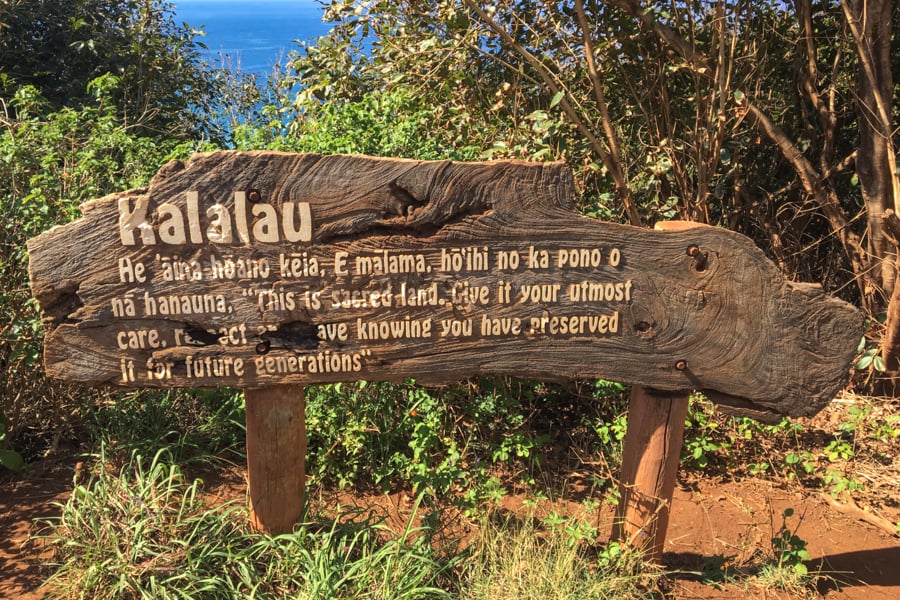
Welcome sign at the red hill
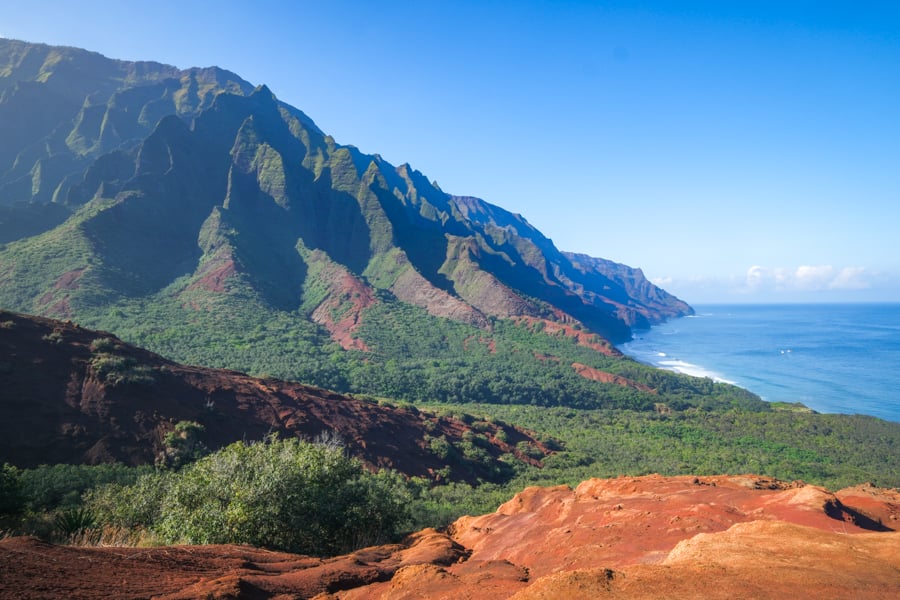
First views coming into Kalalau
• Miles 9–11: Kalalau Valley Rim to Kalalau Beach
At this point, the trail begins a long descent toward Kalalau Valley, offering sneak peaks of the beach far below.
These are the best views of the whole hike in my opinion, but fatigue really sets in here and the trail starts to seem never-ending.
There’s one more stream to cross, and then you arrive at the majestic Kalalau Beach, which is surrounded by tall cliffs. Welcome to paradise!
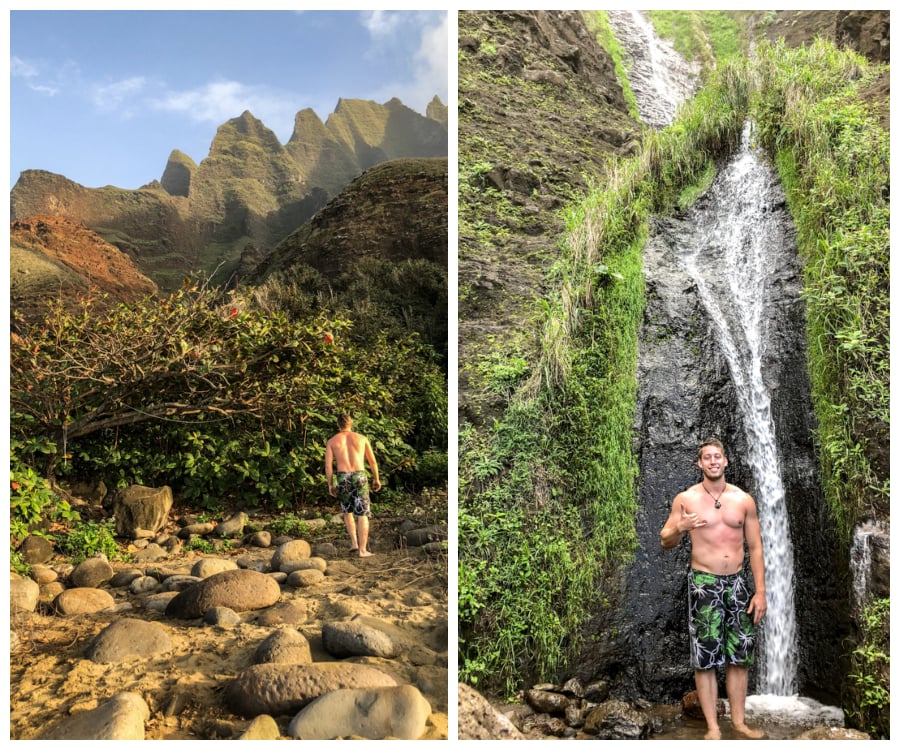
The little waterfall is perfect for showering
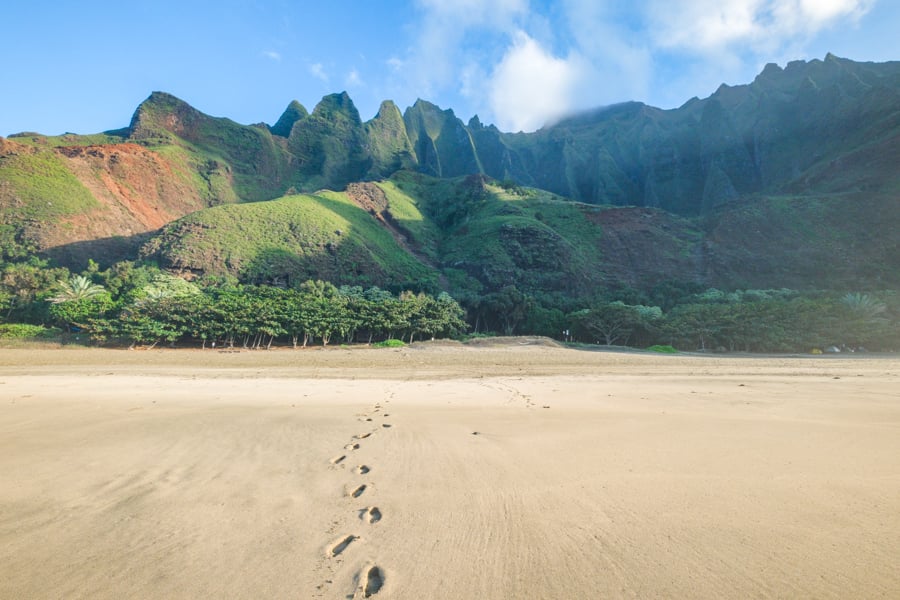
Kalalau is the ultimate camping spot
In many ways, Kalalau is the ultimate place to camp, with plenty of sites to pitch a tent or hammock among the trees.
There’s even a little waterfall you can use to shower, called Ho’ole’a Falls. At night, you sleep to the sound of the waves.
If you want to do a bit of extra hiking during your stay, you can do the side trail into Kalalau Valley, where there’s a swimming hole and other neat sights that most people miss.
When you’re done camping at Kalalau, you retrace the same trail to go back.
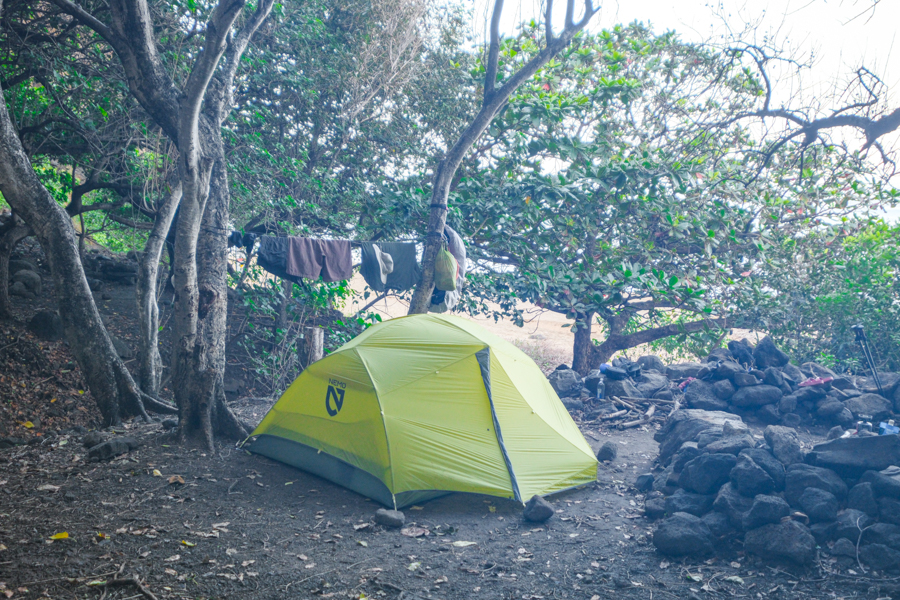
Tent camping near the beach
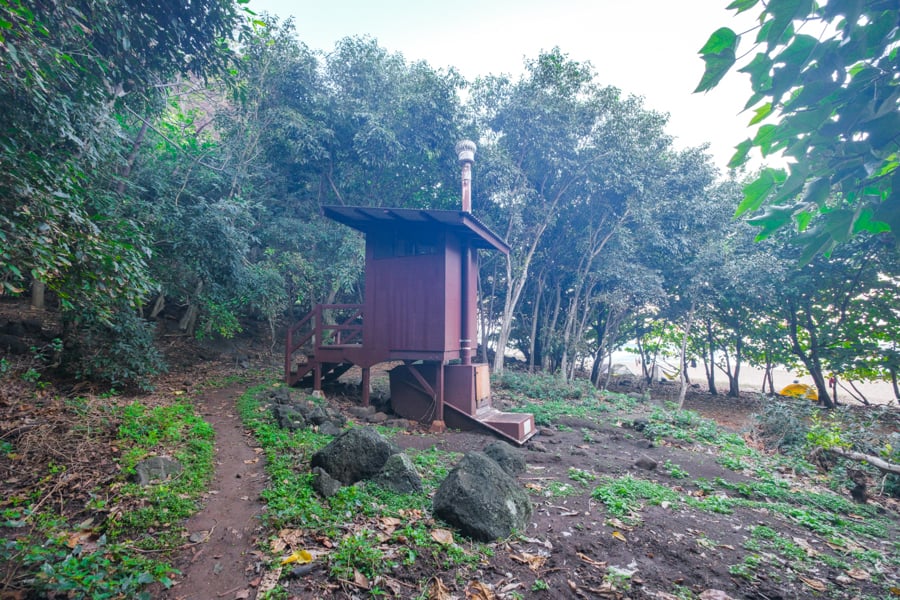
Toilet at the camp
Map Of The Trail
Here’s a map from AllTrails that shows the hiking route and elevation profile.
As you can see, it’s a fairly straightforward route, but it’s long and there are tons of ups and downs. It’s like hiking on a rollercoaster!
If you sign up for AllTrails Plus, you can download the map and use it offline while hiking. It’s very handy!
Video Of The Trail
Here’s a good 6 hour long video on YouTube that shows the entire Kalalau Trail from start to finish, if you want to be able to visualize everything.
Kalalau Permit System
A permit is required to hike and camp on the Kalalau Trail, and only a limited number are available per day.
During the summer months, permits can sell out very fast, so you have to act quickly and book months in advance to get one.
Otherwise, it’s possible to hike the first 2 miles of the trail (to Hanakapiai Beach & Falls) with a day use reservation from Ha’ena State Park, but anyone going past Hanakapiai needs an overnight camping permit.
Remember to save a copy of your permit on your phone, or print a copy and keep it dry. You probably won’t be able to pull up emails during the hike, and you need to be able to show the permit if any park rangers do a spot check on the trail.
Book Now: Kalalau Camping Permits
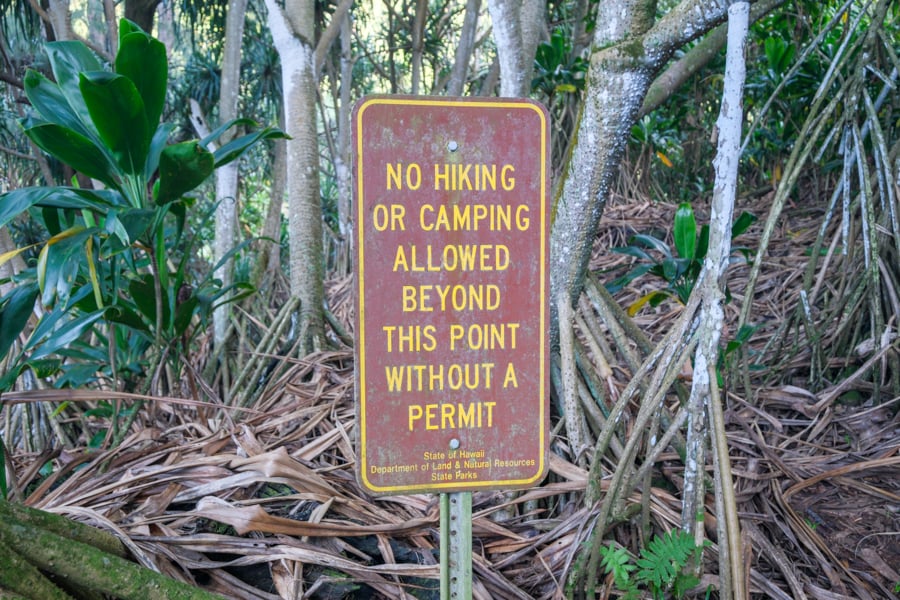
Permit sign at Hanakapiai
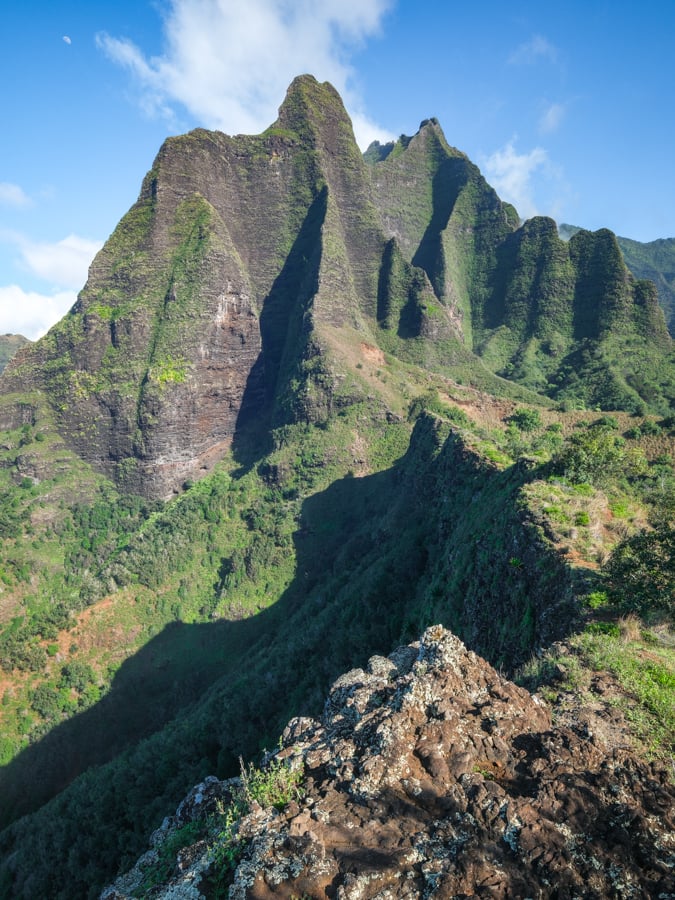
These views are worth the challenge
Trailhead: How To Get There
The trailhead for Kalalau is located at Ke’e Beach near Hanalei, on the north side of Kauai. Coming from the Lihue airport, the drive is easy but takes a little over 1 hour.
If you’re planning to explore other places on the island, the best way to get around is by renting a car. We’ve used DiscoverCars and can recommend them.
Otherwise, if you don’t have transportation in Kauai, you can get to the trailhead with Lyft or Uber, but it’s going to be expensive.
There’s also a shuttle system from Princeville and Waipa, but it’s pretty limited.
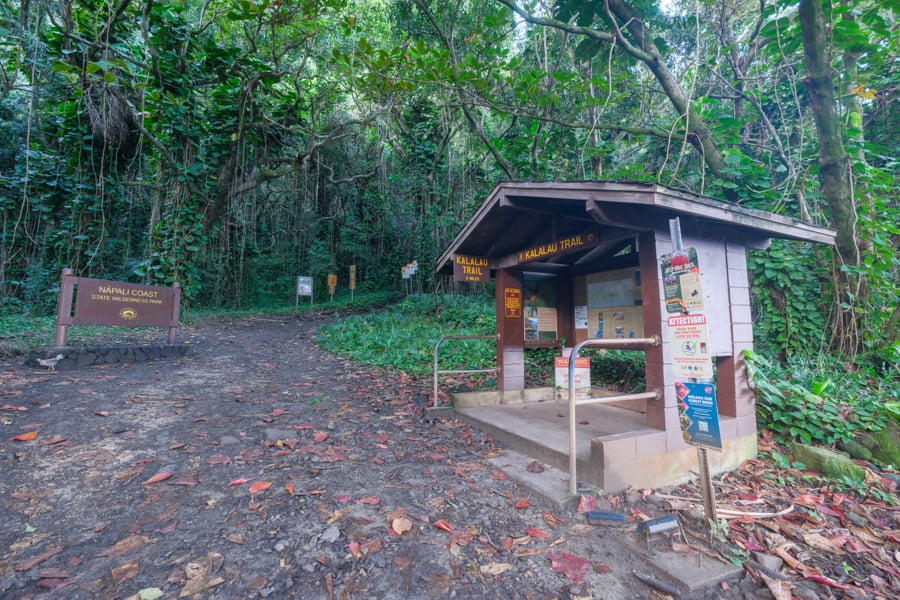
Trailhead
Facilities At The Trailhead
The trailhead has bathrooms, outdoor showers, and drinking fountains.
You can use these to get recharged or cleaned up, before and after the hike.
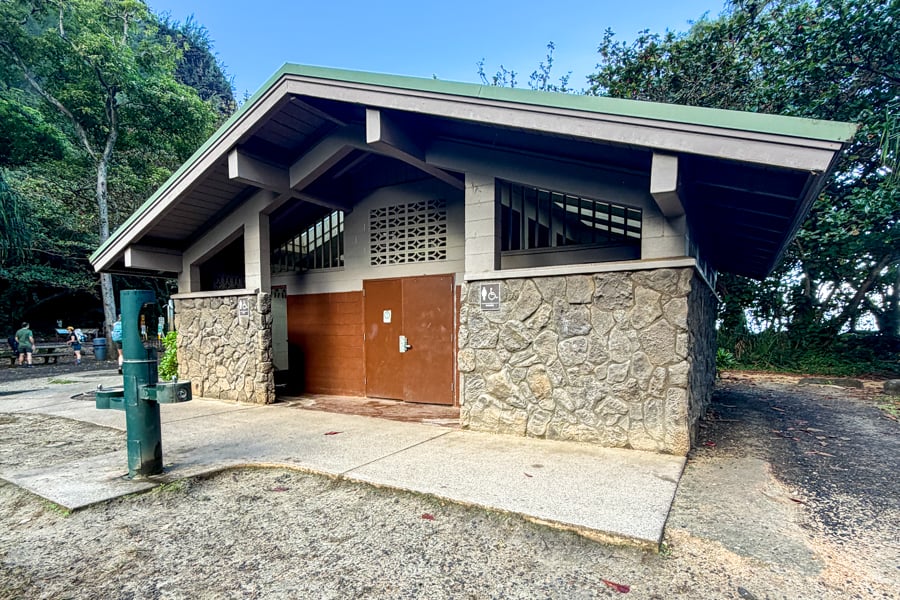
Bathrooms at the trailhead
Parking At The Trailhead
Even if you have a camping permit for Kalalau, you need a separate permit to park overnight at the trailhead. These are available at Go Haena.
In the past, vehicle break-ins have been common at the trailhead, so please don’t leave anything valuable or important in your car.
If you get to the trailhead by shuttle or any other drop-off, you don’t need a parking permit for that.
Last time I did the hike, a relative dropped me off at the trail and then picked me up after. A permit isn’t needed for that as long as they don’t park or stay at the trailhead.
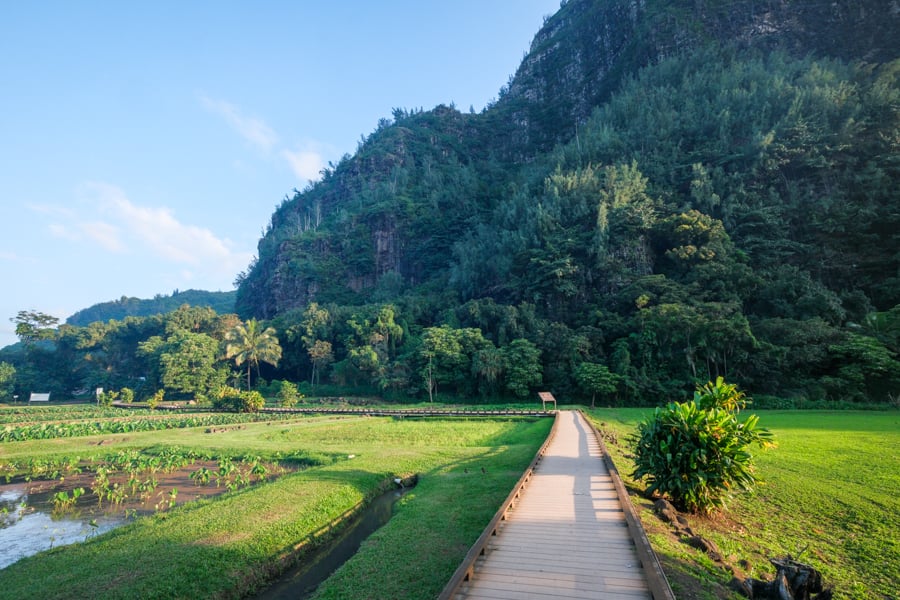
Cross these planks to reach the trailhead from parking
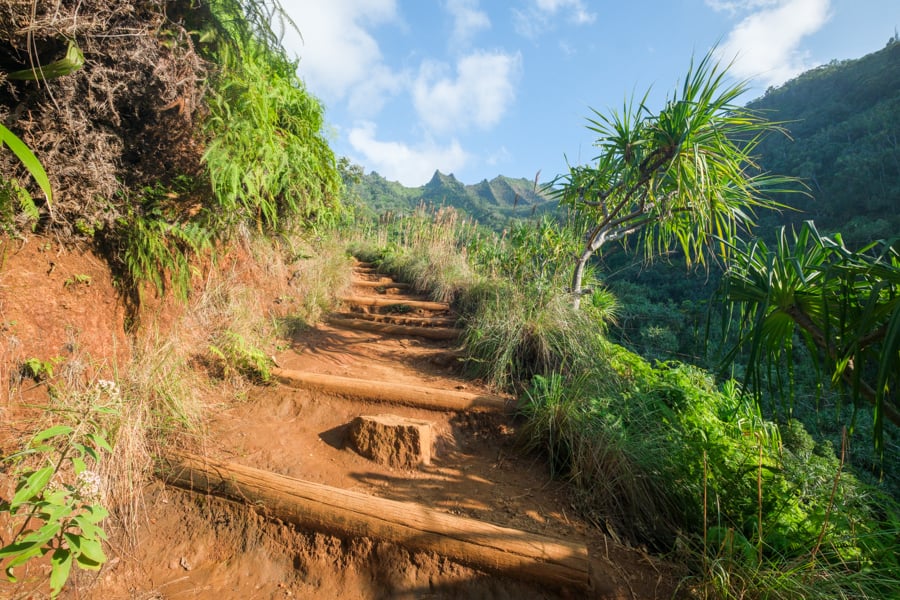
Hiking path near Hanakapiai
What To Bring
- Backpack. I’ve always traveled light at Kalalau by using my day bag, which is a 20 or 30 liter backpack. However, many people will probably prefer to use a proper full size pack meant for backpacking, such as this one from Teton Sports.
- Clothes. I’d recommend a light shirt and shorts for hiking in the heat all day, plus maybe a spare change of clothes to sleep in.
- Hat. You’ll want a cap to protect your face from getting burned by the sun, or a wide-brim hat to cover your ears and neck.
- Shoes. It’s important to have sturdy hiking shoes/boots with good traction and ankle support. For hiking socks, I like Cloudline; they’re comfortable and don’t hold smell.
- Sandals. Very handy for walking around the camp once you get there. Trust me, your feet will be very sore after the hike, and you won’t want to walk barefoot on sticks and rocks!
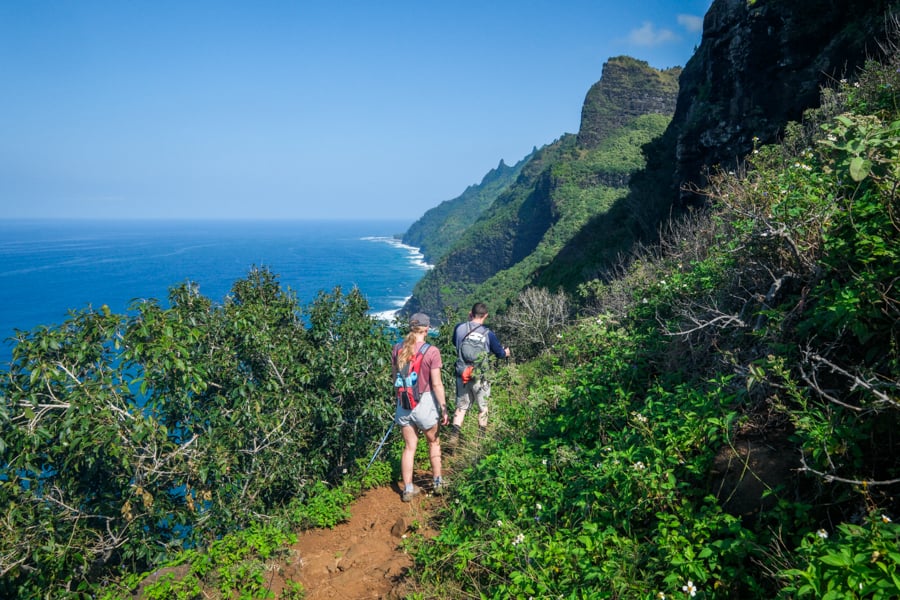
The views are amazing for almost the whole trek
- Trekking Poles. This comes down to personal preference, but a lot of people find trekking poles helpful on the Kalalau Trail.
- Waterproofing. I use a backpack cover like this one, plus some plastic bags or Ziploc bags for things on the inside if needed. Just remember to pack out anything you pack in.
- Stove. Something like an MSR PocketRocket or Fire-Maple is good for cooking freeze-dried meals at the camp. You can rent these locally in Kauai if you don’t want to buy one.
- Fuel. You’ll need gas canister(s) like this one for the stove. Keep in mind fuel can’t be brought on planes, so you’ll have to buy it in Kauai.
- Food. The best food to bring for camping is freeze-dried meals like Mountain House or Backpackers Pantry. These are light and easy to cook, and taste pretty good. Remember to bring a spoon or spork for eating! 🙂
- Snacks. While hiking, it’s good to have small snacks for energy/protein. I like to bring trail mix, beef jerky, and/or granola bars.
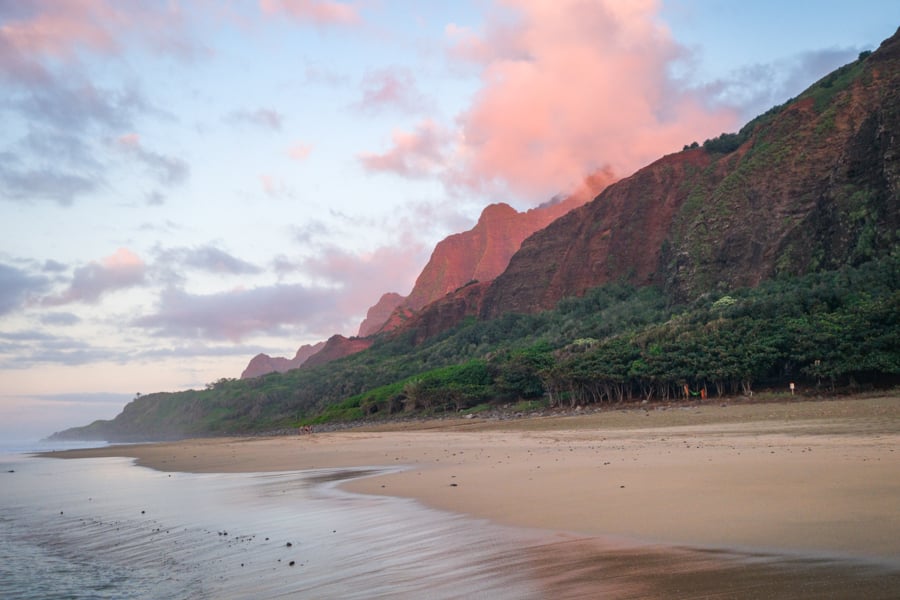
Red clouds in the sunset
- Water. I’d start the trek with at least 2 liters of water. It’s better to have too much than not enough. It can be helpful to have a CamelBak or other hydration bladder, that way you don’t have to take water bottles in and out of your bag while on the trail. You might also want to consider a collapsible jug to use at the camp site.
- Filter. This is essential because you can’t carry an infinite amount of water. Some people say the water is safe to drink from the streams at Kalalau, but I personally wouldn’t risk it unfiltered. You can easily make it safe by using purification tablets, a straw filter, a UV pen, or a filtered bottle. Boiling also works. Each of these methods have their own pros and cons. I like to carry a filtered bottle, with iodine tablets as backup.
- Drink Mixes. You’ll be sweating like crazy on the trail, so it’s good to have hydration powder to replace your electrolytes. I like these mixes from Liquid IV, and they’re small enough to carry a bunch easily.
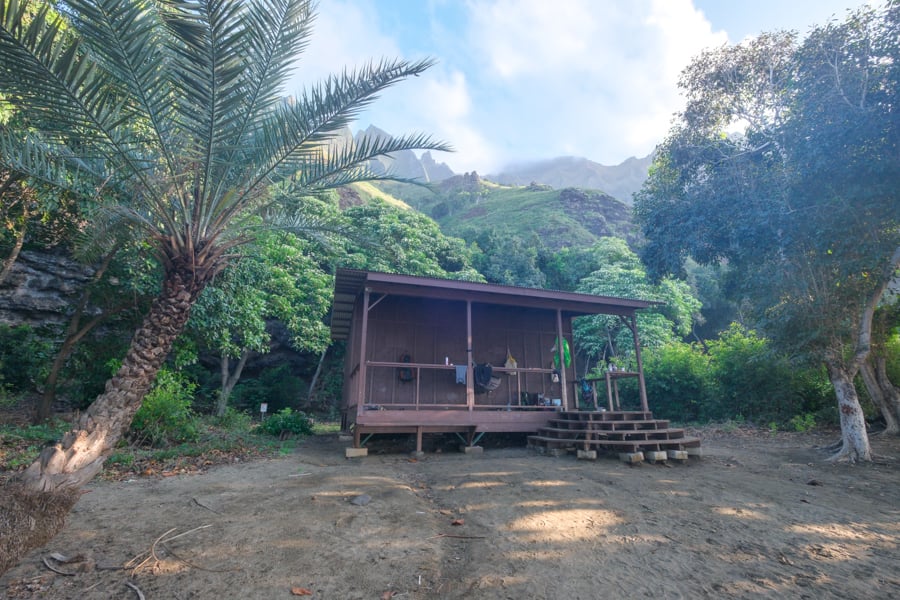
Ranger shack at Kalalau Beach
- Sleeping Gear. For the camp, most people will bring a light tent or a travel hammock, plus a sleeping bag or blanket. I’ve always done the hammock, but if you get unlucky with weather, a tent is better.
- Bug Spray. I’ve never really had issues with bugs on the Kalalau Trail, but you will need spray if you plan to camp at Hanakoa.
- Headlight. This is an absolute must. You might find yourself hiking after dark, and you need to be able to see where you’re stepping. A light is also helpful for finding your way around camp. I like this headlight from Bushnell or this one from Streamlight. Remember to bring extra batteries too.
- Toiletries. Small things like travel size tissues, body wash, shampoo, etc.
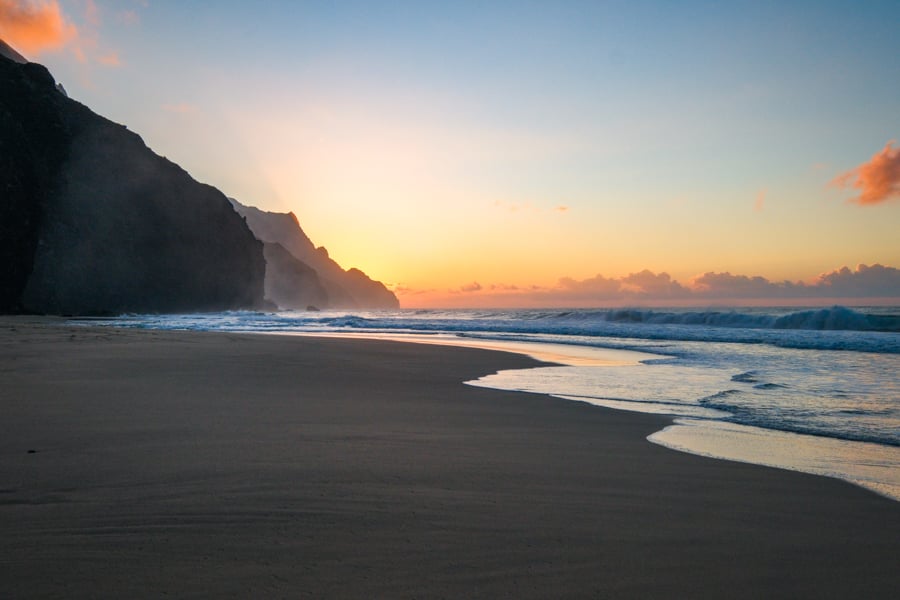
Sunset at Kalalau Beach
How Hard Is It?
Kalalau is a long, hard hike with a ton of elevation gain. There’s also the heat and humidity, and the fact that you’ll be carrying a heavy pack for camping.
It takes a full day of hiking (6-12 hours) to hike one way from the trailhead to the beach, and then at least as long to hike back to the trailhead.
All in all, it’s one of the hardest hikes I’ve done. You should definitely train for it before you go. It’ll wreck you.
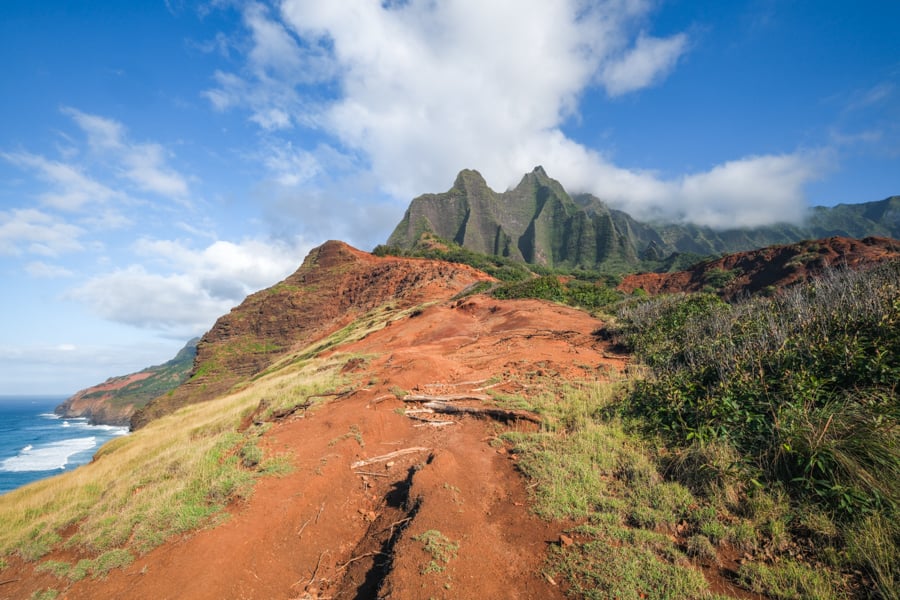
The long red hill
Ideally, you should spend at least a full day and two nights resting at Kalalau Beach before you hike back.
Last time I did the trek in 2 days and 1 night, but that was even harder and I wouldn’t recommend it unless you’re short on time.
Usually by the time I reach the camp at the end of the trail and flop down to sleep, I’m so tired I could sleep on solid rock. Even the hard ground feels soft like a mattress.
Going back is a chore too. The ups and downs seem endless, like a rollercoaster of elevation gain.
If you need to make the trail easier, you can break it up by spending an extra night camping at Hanakoa in either direction, although that’s a buggy campsite with not much to see.
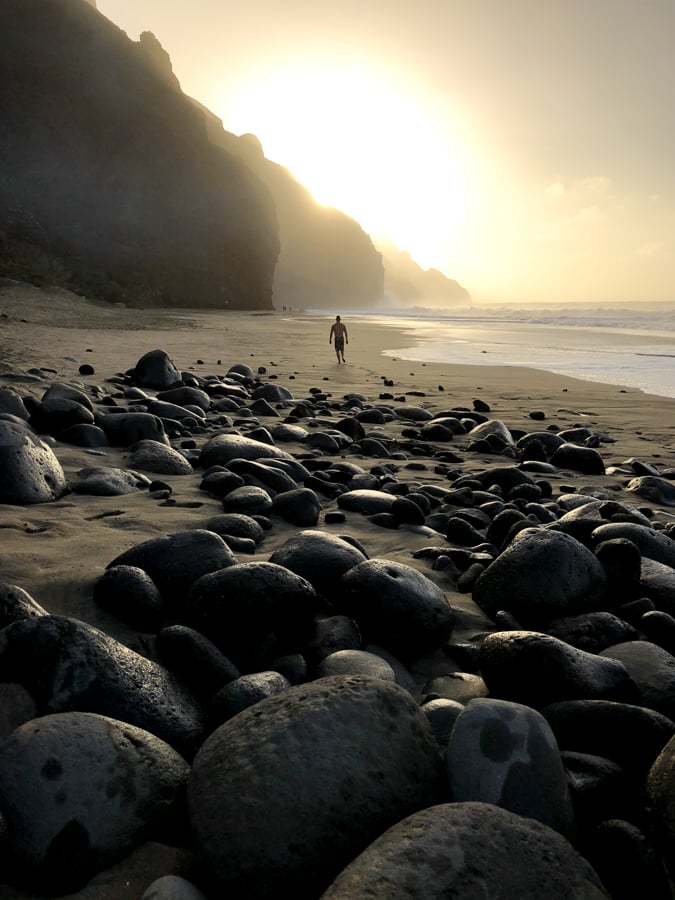
Epic sunset at Kalalau
Is It Safe?
Kalalau is not without risks. This is a very weather dependent hike and the conditions can change in an instant.
I wouldn’t recommend this hike for young kids, older people who aren’t in good shape, or anyone who isn’t surefooted and comfortable with heights.
As of 2026, there have been 17 confirmed deaths on the trail, and that’s if you exclude drownings at the beaches, where another 42 have died.
I wrote a complete safety guide with more info about these incidents, how they happened, and how you can avoid them. You can check it out in the link below.
Read More: Deaths & Safety At Kalalau
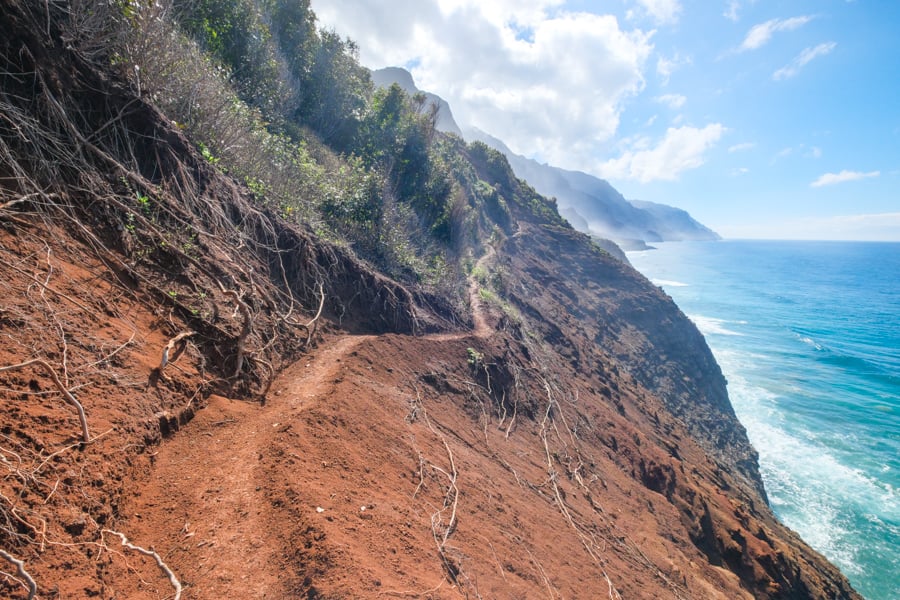
This dirt cliff can be scary when it rains
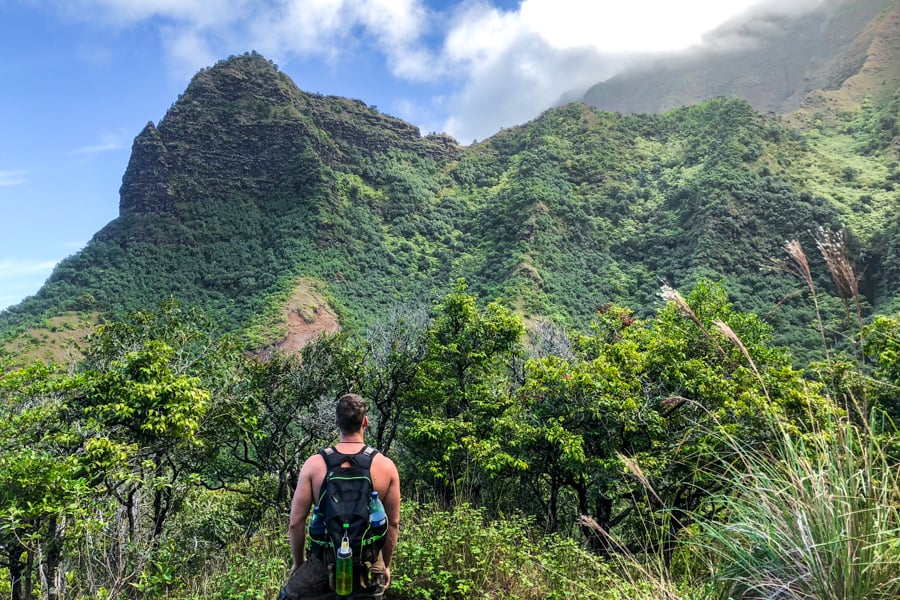
A pic from my second hike at Kalalau
Other Tips For The Trek
- Water Sources. There are lots of good water sources on the Kalalau Trail. The main streams are at 2 miles (Hanakapiai), 6 miles (Hanakoa), 9 miles (Kalalau Valley), and 11 miles (Ho’ole’a Falls). It’s a good idea to treat or filter all water before drinking.
- Toilets. There are simple composting toilets at the trailhead (Ke’e Beach) and throughout the hike at 2 miles (Hanakapiai), 6 miles (Hanakoa), and 11 miles (Kalalau Beach).
- Foraging. Sometimes you can find a few different kinds of wild fruit growing on the trail, including mangoes, guavas, papayas, lilikoi (passionfruit), and mountain apples.
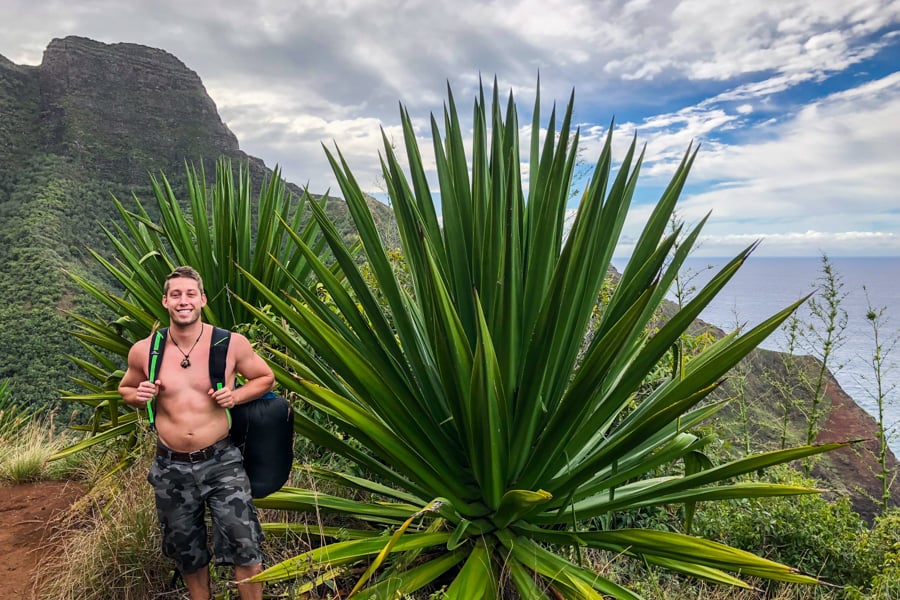
Giant plant along the trail
- Bugs. There are mosquitoes on the Kalalau Trail, but they aren’t known to carry any tropical diseases. They’re mainly present in damp, still areas like Hanakoa or Hanakapiai Valley. It’s more rare to see them at Kalalau Beach, and I think the breeze there tends to keep them away.
- Cell Service. From start to finish, there’s no cell phone service anywhere on the trail; not even in the parking lot. It’s nice to have a break from life, but if you need to stay in touch for things like trailhead pickup or checking in with family, then the only way to do it is with a satellite communicator such as the Garmin inReach. Some phone networks like T-Mobile also offer plans with satellite data for smartphones. I used that on my last trek and it was helpful for arranging my pickup afterwards.
- Supplies. There’s an Ace Hardware and Walmart in Kauai if you need to buy fuel canisters and other supplies. You can also rent camping gear from Pitch A Tent.
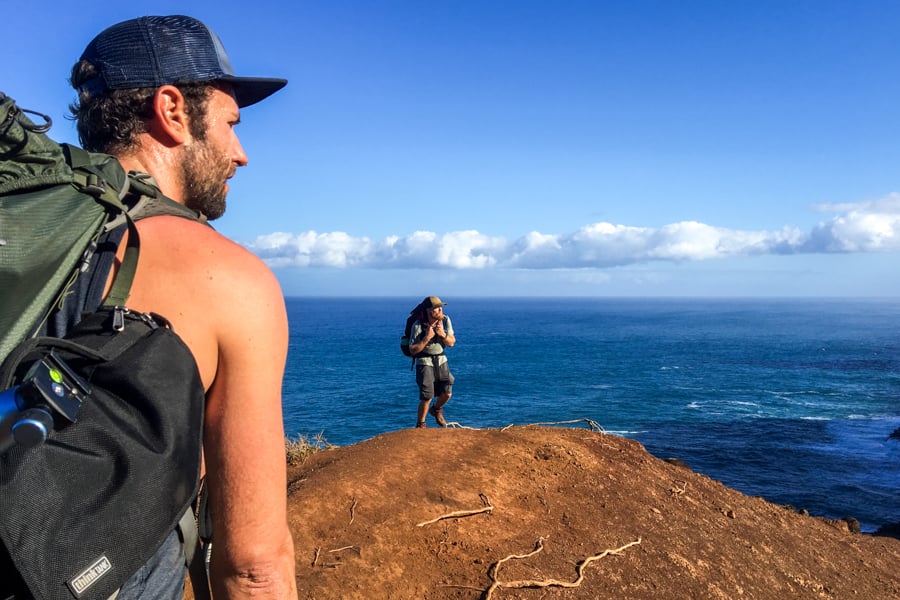
Chilling on the red hill
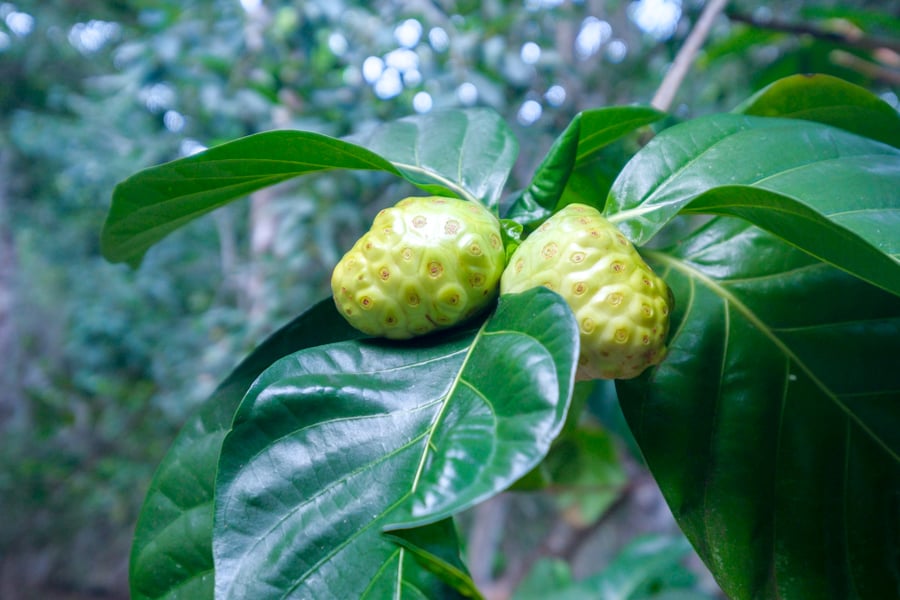
Noni fruit
Best Time To Go
The dry season in Kauai runs from April to September. You’re still not guaranteed to have good weather in those months, but in general it’s the best time to do the hike. It’s going to be easier, safer, and more enjoyable.
The rainy season in Kauai runs from October to March, and the island is especially wet from December to February. You can still do the trek in those months, but you have a higher chance of running into rain, mud, and cloudy weather.
Every time I’ve done Kalalau was in the rainy season, just because we prefer to go to Hawaii in the winter to escape the cold on the mainland. One of the nice things in the winter is that it’s easier to snag permits because there’s less competition for them.
As you would expect, I’ve run into rain on most of my hikes at Kalalau, but it was still a blast and the hike is still very doable in the wet season as long as you’re careful and you respect the weather.
Before my hike, I kept an eye on the forecast for Hanalei at The Weather Channel and Accuweather, and those were pretty accurate.
The state may close the trail if the weather gets too sketchy, but you can monitor that on the DLNR website or Go Ha’ena.
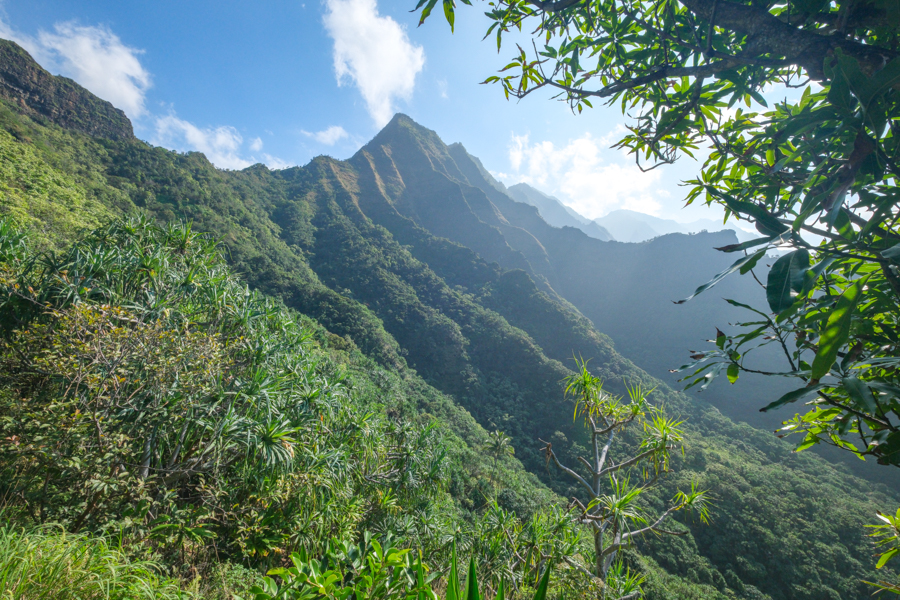
What a view
The other question is what time of day to start the trek. Morning is best, but you don’t have to start crazy early if you don’t want to.
It depends on your hiking style and how fast you are. I hit the trail at 9 AM on my last trek, and still reached Kalalau Beach well before sunset, giving me plenty of time to cook and make a camp before dark.
If your hiking speed is on the slower side, you’ll probably want to start earlier than that to give yourself more time.
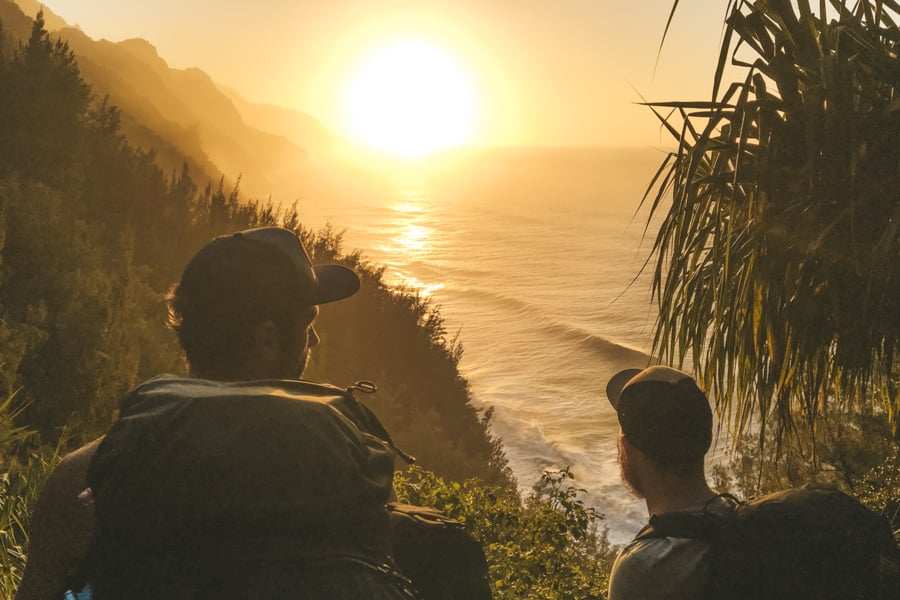
A phone pic from my first hike at Kalalau
More Hawaii Travel Guides
Thanks for looking! I hope you enjoyed this guide for how to hike the Kalalau Trail in Kauai.
Don’t forget to check out my other Hawaii travel guides before you go!
Best Kauai Tours
See Also
- Deaths & Safety On The Kalalau Trail: What To Know
- My Review Of The Kauai Doors-Off Helicopter Tour
- 6 Things To Book In Advance For Kauai
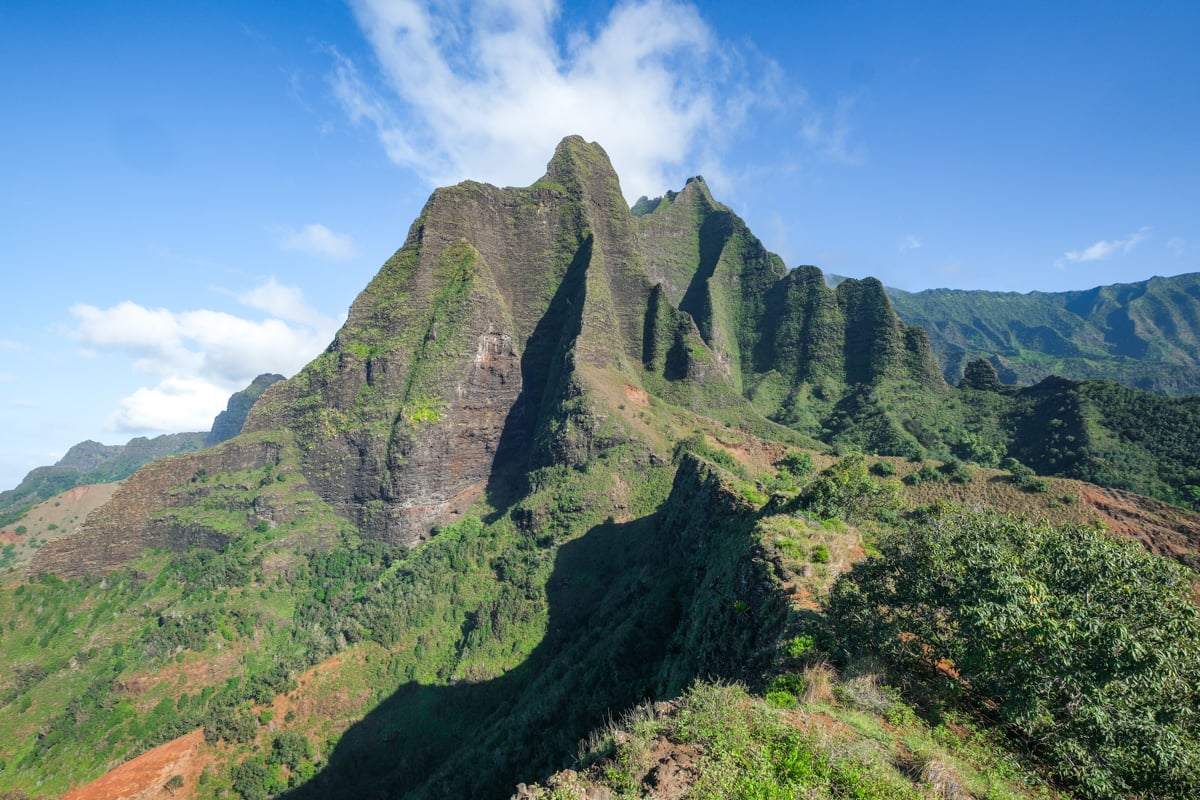
1 comment
How beautifully you have captured all these scenes